 Goats and Glaciers

 Located just south of Sunwapta Falls heading toward Jasper, Goats & Glacier Lookout offers an expansive, dramatic vista that captures the rugged wildness of the Canadian Rockies.
Terry Nguyen
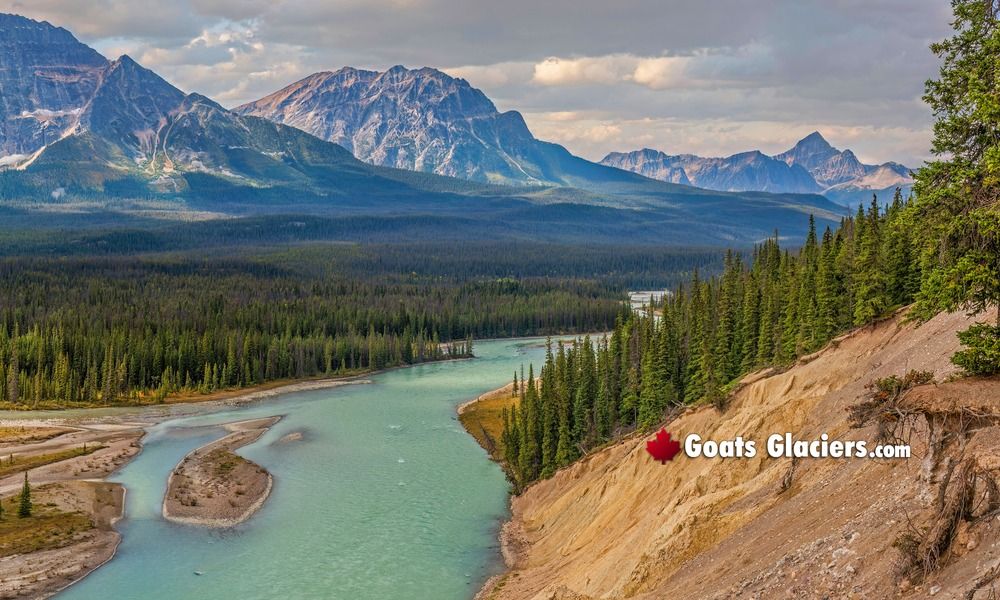
One of the most scenic and rewarding roadside lookouts along the northern stretch of the Icefields Parkway! Located just south of Sunwapta Falls heading toward Jasper, Goats & Glacier Lookout offers an expansive, dramatic vista that captures the rugged wildness of the Canadian Rockies in a single panoramic frame.
The pull-off is easy to access, and stepping up to the wooden fence rewards you with an incredible view looking straight down over the wide, braided Athabasca River as it snakes through the valley floor. In the distance, the jagged peaks of Mount Kerkeslin and the Fryatt Range rise majestically, cradling hanging alpine glaciers. The lookout gets its name because mountain goats frequently venture down the steep mineral-rich clay and shale banks below to lick essential salts and minerals—keep your binoculars handy or scan the steep gravel cutbanks carefully! Whether you catch a glimpse of the nimble wildlife or simply pause to admire the sweeping river valley, it’s an effortless, postcard-worthy stop that shouldn’t be overlooked.
Goats & Glacier Lookout is a stunning and peaceful location with breathtaking views of glaciers, valleys, and snow-covered mountains.MM Taxi
Goats & Glacier Lookout is a stunning and peaceful location with breathtaking views of glaciers, valleys, and snow-covered mountains. The scenery is absolutely mesmerizing and perfect for photography or simply enjoying nature in silence.
The viewpoint offers a wide, open panorama that truly captures the beauty of the Rockies. Highly recommended for anyone visiting the area - this spot is unforgettable.
Goats and Glaciers Viewpoint is a great place to see mountains and a big river in Jasper National Park.Deependra Tomar
Goats and Glaciers Viewpoint: A Beautiful Place
Goats and Glaciers Viewpoint is a great place to see mountains and a big river in Jasper National Park. It's easy to get to, so many people like to stop there.
What to See:
1. Amazing Views: You can see big mountains covered in snow and the Athabasca River.
2. Wildlife: You might see mountain goats eating grass on the hills.
3. Easy to Visit: It's a short walk from the parking lot to the place where you can see the view.
Goats and Glaciers Viewpoint is a great place to visit in Jasper National Park. It's beautiful and easy to get to.
There were two goats on the side of a steep incline and it was wonderful weather that contributed to the majestic area.E Butler
This was an amazing area to look out at the natural landscape. There were two goats on the side of a steep incline and it was wonderful weather that contributed to the majestic area. It was an easy walk to the look out area, and had a great view. This is an epic stop along the Ice Fields Parkway.
Read More